Full service companyProud of giving our customers an excellent experience
Vault Door Removal: Expert Tips
Do you have an old vault in your building that you’d like to remove? It’s important to know that vault door removal and vault removal are highly specialised tasks that require expertise, precision, and the right equipment.
These doors are designed to be virtually impenetrable, making them incredibly heavy and intricately integrated into the building’s structure. Removing them involves navigating challenges such as their size, weight, and secure fittings, this can pose risks to both the building and the people involved without proper planning and safety precautions.
The challenges of removing vault doors are mostly due to tight spaces or their integration into the building, which is often structural. Overcoming these issues may require partial disassembly, specialised compact equipment, or temporary structural reinforcements to ensure safe removal without compromising the building’s integrity.
There are many reasons why a business might need to remove a vault door. Upgrades to modern security systems, renovations to make use of space, or relocating to a new site are some of the most common reasons. Whatever the reason, a professional approach is essential to ensure the process is completed safely and efficiently.
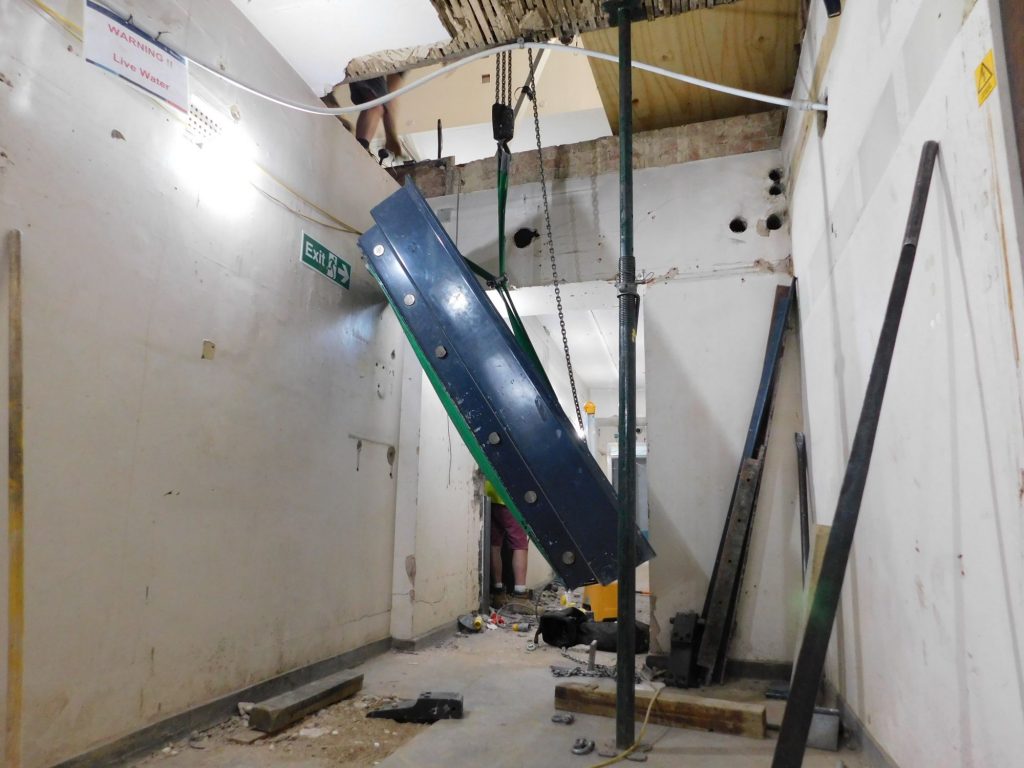
Vault doors are often impressive feats of engineering, built to provide security and durability. However, these same features make their removal a complex and demanding process. A typical vault door can weigh several tons, requiring specialised equipment such as cranes, hydraulic jacks, and custom rigging systems to handle the immense weight safely. Without the proper tools and expertise, the risks of damage to the building or injury to workers increase significantly.
Vault doors are constructed from materials designed to provide exceptional strength, security, and resistance to tampering or environmental hazards which together make the challenge of removal incredibly difficult.
Common materials used for vault doors include:
Steel
Hardened Steel: Used for its high tensile strength and resistance to cutting and drilling.
Alloy Steel: Offers enhanced durability and heat resistance, often used in fireproof vault doors.
Reinforced Concrete
Often combined with steel to provide additional mass and resistance against impact or forced entry.
Composite Materials
Layers of various materials (e.g., ceramics, metals, and polymers) are combined to enhance ballistic resistance, fireproofing, or insulation.
Tungsten or Carbide Alloys
Used in high-security vaults for resistance to extreme drilling attempts or abrasions.
Copper or Aluminium Alloys
Occasionally used for specific functional elements, such as heat dissipation in fire-resistant vault doors.
Fireproofing Materials
Specialised insulation or fire-resistant layers, often placed between steel or concrete, to protect contents during extreme temperatures.
Lead
Found in older vault doors or those designed for radiation shielding, such as in bank vaults doubling as safe deposit storage near medical facilities.
High-Density Polymeric Layers
Used in modern designs for their lightweight properties and ability to enhance overall resistance to specific threats like heat or ballistics.
Adding to the challenge, many vault doors are custom-fitted to their surroundings. This means they are often embedded within walls, floors, or doorframes, making extraction an intricate task. Every removal must be approached with a tailored plan to address the unique integration of the door into the building, ensuring that the process is safe and efficient.
Tools and Equipment for Vault Door Removal
Removing a vault door will require heavy-duty and often specialised tools and equipment to handle the immense weight and design.
Here’s a breakdown of the essential tools used in the process:
Cranes and Hydraulic Jacks
Vault doors often weigh several tons, making heavy lifting equipment essential. Cranes are used to safely hoist the door out of its frame, while hydraulic jacks help to manoeuvre and stabilise the door during the removal process.
Disassembly Tools
Large or heavy vault doors require partial disassembly to make them lighter and easier to remove. This may involve carefully detaching components like hinges, locking mechanisms, or interior panels using specialised wrenches, drills, and prying tools.
Precision Cutting Tools
Precision cutting tools like plasma cutters or angle grinders are used to segment the door into manageable pieces. This ensures safe removal while minimising disruption to the surrounding structure.
Rigging Systems
Heavy-duty rigging systems, including chains, slings, and stabilising equipment, can secure the door during lifting and transport, preventing accidents or shifting.
Protective Equipment
Protective padding and barriers are used to shield walls, floors, and other nearby structures from accidental damage.
Expert Tips for Smooth Vault Door Removal
Successfully removing a vault door requires careful planning and execution; it’s not a task you can take on lightly. Here are expert tips to ensure the process is as smooth and secure as possible:
Hire Professionals Removal of a vault door is a specialised task and sometimes a dangerous task – sometimes it’s best left to experienced professionals. Our teams have the expertise, tools, and training to handle the complexities safely and efficiently, reducing the risk of accidents or damage to the building.
Plan for Limited Access
Often vaults are located in difficult places such as basements or even high-traffic areas of a building. Schedule removal during off-hours or low-traffic times to minimise disruption reducing the impact on your business and/or surrounding areas.
Proper Disposal
Once the door is removed, consider how the materials will be handled. Many vault doors are made from metal which can be recycled or repurposed by taking it to a scrapyard. However, getting the door there might be difficult without professional help.
Post-Removal Repairs
Be prepared for potential repairs to the surrounding area after the door is out. Vault doors are often embedded in walls or floors, so removing them may leave behind structural gaps or damage that need attention to restore the space to its original condition.
Vault door removal is a challenging process that demands professional expertise to manage safety risks. From handling heavy-duty equipment to navigating structural complexities, experienced specialists are essential to achieving a smooth and secure removal.
If you’re considering vault door removal, trust the experts at Trident Safes. Our skilled team is equipped to handle every aspect of the process, we have all the equipment required and our knowledgeable team can minimise disruption to your business. We’ve taken on vault removals and installations of all sizes, see our recent projects to find out more including vault removal from ex-bank premises.
Contact us today for a consultation and a tailored quote. Let Trident Safes provide you with a seamless vault door removal experience.
Bank Vault Removal: What to Expect
Estimated reading time: 7 minutes
Bank vault removal is a highly specialised task requiring precision, expert knowledge, and a deep understanding of structural and security features. Vaults are engineered to withstand extreme conditions and tampering attempts, which makes removing them a difficult task. Vaults are often embedded within a building’s structure, made of materials like concrete and steel, so removal needs to be safe and efficient. Attempting to remove bank vaults without professional support can lead to structural damage, safety hazards, and unexpected costs.
Banks and businesses remove vaults for various reasons, from renovations at the business premises to upgrading older vaults with advanced, secure models. Vault removal is also common when decommissioning or repurposing bank locations due to closures or relocations. Regardless of the reason, this complex process demands careful planning, expertise, and attention to costs – all of which we’ll explore in this guide.
The first step is to conduct an initial inspection to find out the vault’s size, structure, and exact location within the building. This allows us to understand the specific challenges presented by each vault to be removed. Working out its reinforcement level to how it’s embedded within the building’s structure. Careful planning at this stage is essential to ensure that removal can occur without compromising the building’s structural integrity. This requires precise techniques and measuring, we’ll often use a qualified surveyor to ensure maximum safety and adherence to building standards.
Disassembly and Dismantling of the Vault
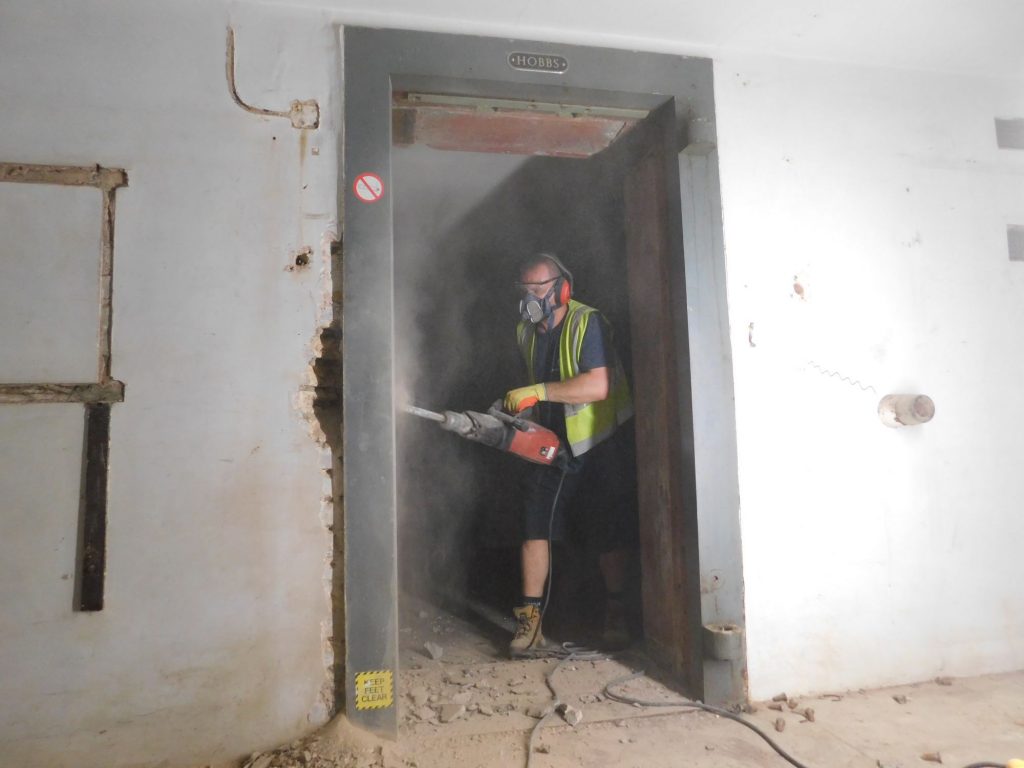
Once the assessment and planning stages are complete, we can begin the process of disassembling and dismantling the vault. Each component, including the doors, locks, walls and interior elements can be carefully removed piece by piece. Vaults are built to be secure, with reinforced concrete and steel parts. This often requires specialised tools and lifting equipment to handle. Given that these materials are extremely heavy, safe handling is essential to prevent accidents and ensure the safety of everyone involved. We have specialist equipment to handle this type of work, many standard construction or demolition companies may underestimate the amount of work involved in this step.
Transport & Disposal
After the vault has been disassembled, the removed vault materials are transported off-site. We prioritise responsible disposal, often opting for eco-friendly solutions such as recycling the metal and concrete elements wherever possible. This reduces the environmental impact but also allows materials to be reused. Transporting such heavy-duty components requires logistical planning and specialised vehicles to handle the weight – we have access to state-of-the-art equipment including a remote-controlled tracked robot, capable of carrying heavy items across different terrain. This is particularly useful as many vaults are located in a basement or in the lower areas of a building.
Timeline for Bank Vault Removal
It’s hard to say just how long this would take as the timeline for removing a bank vault can vary significantly depending on the vault’s size, complexity, and location. Smaller vaults or those with straightforward access may be dismantled and removed in as little as two to three days. However, larger or more intricately installed vaults—especially those embedded within basements or load-bearing walls—can require several weeks to safely remove. Our process would be to complete a full site survey to fully understand the details of the removal process and then give our clients an estimated timeline. As with all jobs sometimes unexpected hazards occur during the process which can add delays.
Factors Affecting the Duration
Several factors influence how long the process takes, including:
Vault Size and Construction: Larger vaults or those constructed with higher levels of reinforcement take longer to dismantle due to the additional weight and materials involved.
Building Location and Access: Restricted or difficult access areas, such as basements or upper floors, can extend timelines due to the requirement of manoeuvring heavy materials through stairs, lifts, or narrow corridors.
Potential Obstacles: Structural challenges like reinforced walls, limited removal routes, or the need for protective measures to preserve the building’s integrity can add time.
Minimising Disruption
Clear communication between the removal team and the business is vital for keeping the process on schedule and minimising disruptions to daily operations. Our process is to work closely with clients to plan removal during non-peak hours so the business can continue functioning smoothly. Proper planning not only reduces downtime but also avoids unexpected delays, keeping the project on track and within the estimated timeframe.
Vault Removal Costs Considerations
When thinking about having a bank vault removed, you’ll want a rough idea of the costs. Understanding the factors that impact costs is essential. At Trident Safes, we provide customised quotes tailored to the specific needs of each project, but some key elements influence pricing.
Factors Impacting Cost
Vault Size and Weight: Larger, more heavily reinforced vaults require more time, specialised tools, and manpower to dismantle and remove, which can increase costs.
Location Within the Building: Ground-level vaults are typically less expensive to remove compared to those located in basements or upper floors, which may involve additional logistical challenges like navigating stairs or using cranes/HIABs to remove vault pieces.
Distance to Disposal or New Installation Site: Transportation costs vary depending on how far the removed materials need to travel, whether for disposal, recycling, or installation at a new location.
Average Costs
Depending on the job a typical vault removal costs typically range from £5,000 to £20,000, depending on size and complexity. Smaller vaults or vault door-only removals might be lower, while larger vaults with reinforced walls or difficult access locations are closer to the higher end.
Potential Add-Ons that might increase costs:
Site Repairs After Removal: If the vault was embedded in walls or floors, additional costs may apply for repairing and restoring these areas to be functional.
Partial Removal (e.g., Vault Door Only): For businesses looking to retain the structure but remove the door, we offer this service at a reduced cost compared to full vault removal.
We prioritise transparency and where possible provide clear estimates upfront, ensuring there are no surprises during the process.
Safety Measures and Precautions
Vault removal involves handling heavy, reinforced materials like steel and concrete, meaning safety needs to be a top priority. This is why vault removal should only be carried out by certified professionals, minimising risks to workers and property.
At the start of the process, structural assessments are critical to ensure the building’s integrity during the vault extraction, especially for vaults embedded in load-bearing walls or sensitive areas like basements.
Older vaults may contain hazardous materials, such as asbestos, requiring specialised handling and disposal. It’s important to follow strict safety and environmental regulations, ensuring the process is secure and compliant from start to finish.
Choosing the Right Vault Removal Partner
Selecting the right company ensures a safe and efficient vault removal process. Look for experienced professionals with proven expertise, certifications, and robust safety protocols. A reliable partner should offer clear communication, detailed cost estimates, and tailored solutions to meet your specific needs.
Contact us today to discuss your project and let our team guide you through every step of the process. Trust Trident Safes to handle your vault removal with professionalism and precision.
Finding the Perfect High Security Safe: Where to Look and What to Ask
Estimated Reading time: 9 minutes
Protecting your valuables—whether it’s cash, jewellery, business documents, or important data—selecting a high-security safe is a critical decision. The challenge? Not all safes are created equal, and finding the perfect safe that balances protection, functionality, and cost can be overwhelming. With so many options available, from specialised retailers like us to online marketplaces where the quality and standard of safes can be questionable. With high security safes, there’s a wide variety of security features to choose from, knowing where to start can feel daunting.
In this guide, we’ll help you uncover information to help you make the right decision when buying a safe.
When searching for the perfect high-security safe, it’s important to know where to look to find reliable, high-quality options. Here are a few key avenues to consider:
1. Specialised Safe Retailers
One of the best places to start is with specialised safe retailers, like Trident Safes, who focus exclusively on security products. Retailers like us often have years of experience and deep knowledge of the industry, this insight allows us to understand your needs and guide you to the right safe based on your specific needs, whether it’s a safe for home, an office safe, or commercial use such as pubs & bars, hospitality businesses, jewellers, pharmacies, construction businesses or retail. The benefit of working with a specialised retailer is the expert advice you’ll receive, including recommendations for safes that meet strict industry standards, ensuring optimal security and often insurance purposes.
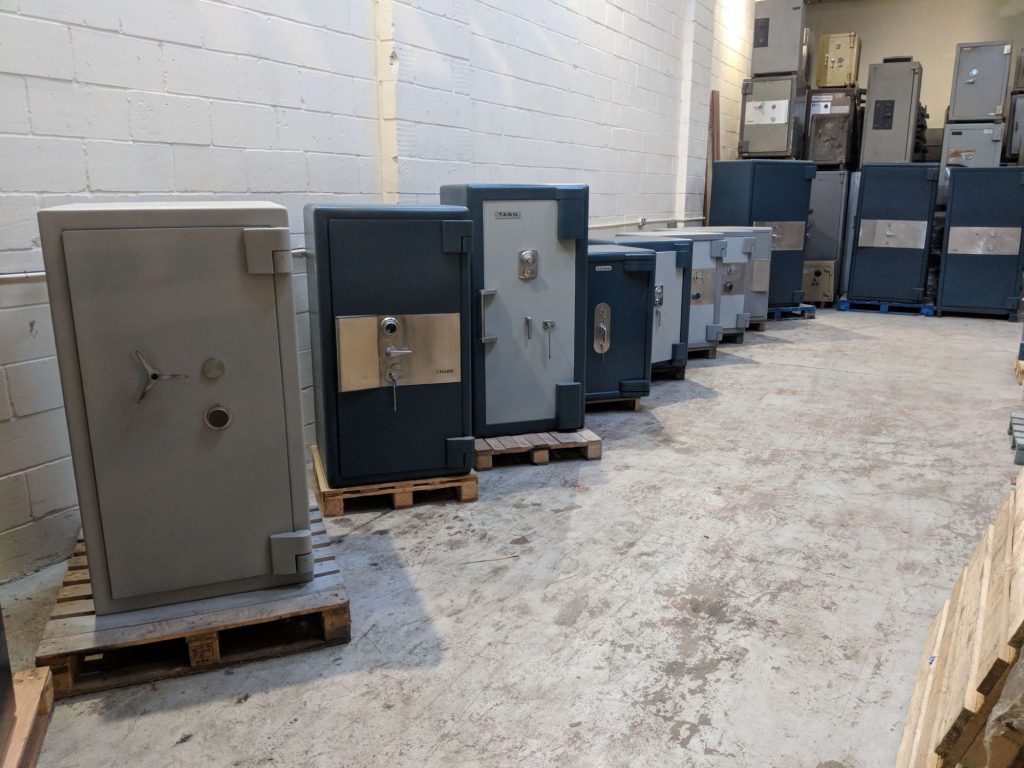
Additionally, specialised retailers typically offer a wide range of safes, from brand-new, high-tech options to refurbished safes that provide excellent value for money.
2. Online Marketplaces
Another option is large online marketplaces like Amazon or Alibaba, which offer an extensive variety of safes from a range of sellers. While offering convenience and cheap pricing, they also come with some risks. It can be difficult to verify the quality of the products or the reputation of the seller, and customer support is often limited. If you choose to go this route, be sure to thoroughly research the brand and read customer reviews. While you may find budget-friendly safes here, remember that when it comes to security, price shouldn’t be the only deciding factor. A cheap, unreliable safe could cost you the contents.
3. Direct from Manufacturers
If you have a specific brand in mind, such as Chubb, buying directly from the manufacturer is another solid option. Many high-end safe manufacturers offer direct sales, allowing you to purchase a safe with complete confidence in its authenticity and quality. By purchasing from the manufacturer, you often receive warranties and after-sales support. However, prices may be higher compared to retailers or refurbished options, as you are paying for brand-new, cutting-edge security solutions.
4. Purchasing from Reputable Sources like Trident Safes
While there are many places to find high-security safes, it’s crucial to purchase from a trusted, reputable source. At Trident Safes, we pride ourselves on our long-standing expertise in the security industry, offering both new and refurbished safes that meet the highest standards of protection.
Questions to Ask When Choosing a High-Security Safe
Choosing the right high-security safe involves more than just picking one off the shelf. To make sure your investment meets your needs and provides the best possible protection, there are several important questions you should ask.
Here are key considerations to guide you in the process:
1. What level of security does this safe provide?
Why ask: Not all safes are rated equally when it comes to security. Safes are typically graded by insurance or security standards such as Eurograde, which provides insight into their resistance to fire, break-ins, and other threats.
2. What size and capacity do I need?
Why ask: Safes come in various sizes, and it’s essential to choose one that fits your space and can accommodate the items you need to protect. Consider what you plan to store and how much space it will require, both now and in the future.
3. How should the safe be installed?
Why ask: Proper safe installation is critical to maximising a safe’s security. Some safes are designed to be floor-mounted, while others may need to be wall-mounted or bolted to a specific location. You’ll want to know the installation requirements and ensure you can meet them. The installation method may also affect insurance purposes so it’s important to be aware.
4. Is the safe fireproof or waterproof?
Why ask: Depending on what you’re protecting, fireproof or waterproof safes may be necessary. If you’re safeguarding important documents or electronics, for example, these features can be crucial in the event of a fire or flood.
5. What kind of warranty or after-sales support is included?
Why ask: A good safe is a long-term investment, and it’s essential to ensure that it’s backed by a reliable warranty and strong after-sales support. A good warranty indicates that the manufacturer stands by their product.
6. What type of lock is best for my needs?
Why ask: Safes come with different locking mechanisms, such as key locks, combination locks, and digital keypad systems. Understanding the pros and cons of each type will help you choose the most secure and convenient option for you or your business. For example, a key might be best if it’s only one person who needs access while a code might be better for an organisation where multiple users need access to the safe.
7. Can the safe be upgraded or reprogrammed in the future?
Why ask: Some safes allow for upgrades or changes to locking mechanisms over time, which can be valuable as technology evolves or if your security needs change.
8. Does the safe meet my insurance requirements?
Why ask: Insurance companies may have specific requirements when it comes to the type of safe you need to protect high-value items. Make sure that the safe you choose complies with your insurance provider’s standards. For example, meeting Eurograde standards.
9. What delivery options are available, and is discreet delivery possible?
Why ask: Safes are large and often require special delivery arrangements and in some cases special safe installation. Additionally, if you’re concerned about security, you may want the delivery to be discreet to avoid drawing attention to the new installation.
Understanding Security Ratings and Features
When selecting a high-security safe, understanding security ratings and features is essential to understand the level of protection offered vs the level of protection you need. Security ratings help define the safe’s ability to withstand various types of attacks, from burglary to fire, while advanced features ensure that your valuables are safe against modern threats. The common security rating we work to is Eurograde. The safes are independently tested and approved from levels 1 to 6.
Common Security Ratings
Eurograde Ratings
Common across Europe, these ratings (e.g., Eurograde 0 to Eurograde 6) are tied to the amount of insurance coverage the safe can provide, depending on the value of the items stored inside. A higher Eurograde number means a stronger safe that can store higher-value items.
UL Ratings
In the U.S., UL certifies safes based on their resistance to various break-in methods, such as using drills, saws, or torches. For example, a UL TL-15 safe is certified to resist attack by tools for 15 minutes, while a TL-30-rated safe resists for 30 minutes.
Fireproof and Waterproof Ratings
These ratings show how well a safe can protect its contents from fire and water damage. Safes with fireproof ratings, like those certified by UL, are tested to withstand specific temperatures for a certain duration (e.g., 60 or 120 minutes). Waterproof ratings indicate how well the safe can keep moisture out.
Key Features to Look For
Beyond ratings, high-security safes often come with specialised features to provide extra layers of security, these could be:
Reinforced steel walls: The thicker and more durable the safe’s construction, the more resistant it is to brute force attacks.
Anti-drill plates: These protect the locking mechanism from being tampered with by drills or similar tools.
Biometric or digital locking systems: These provide quick access to the safe while enhancing security by reducing the risk of unauthorised entry.
Internal locking compartments: Additional secure compartments within the safe can provide added protection for particularly valuable items.
Assessing Your Security Needs
When you’re in the market for buying a safe your first thought might be that you need a specific type of safe to store specific items. Through this process, you need to assess your security needs. Choosing the right high-security safe starts with understanding your needs. Here’s a quick guide to help – for a full breakdown see our comprehensive safe buying guide.
1. Identify What You’re Protecting
Are you securing personal valuables like jewellery, sensitive documents, or business assets like cash or data? Knowing what you need to protect will guide your safe selection.
Ensure the safe can store your current valuables with room for future needs. Check the available space where it will be installed.
4. Choose a Locking Mechanism
Key, combination, digital, and biometric locks offer different levels of convenience and security. Pick one that fits your preferences.
5. Plan for Future Needs
Look for safes that allow upgrades or additional features to meet evolving security demands.
Finding the perfect high-security safe requires careful consideration of your specific needs, from the type of valuables you’re protecting to the level of risk you face. As you begin your search, remember to explore trusted sources like specialised safe retailers, evaluate security ratings and features, and ask the right questions about size, installation, warranty, and support. By understanding your requirements and considering future-proof options, you can make a well-informed investment that provides reliable protection.
At Trident Safes, we offer a comprehensive range of high-security safes, backed by years of industry expertise and a commitment to quality. Whether you’re securing personal valuables or business assets, we have the knowledge and products to meet your needs. We also offer a comprehensive range of safe services including safe removal & relocation, safe installation, safe repair and safe hire.
Exploring the World’s Most Impenetrable High Security Vaults
In an age where safeguarding assets has become paramount, the evolution of high-security vaults stands at the forefront of global security advancements. Across the world, the demand for large high-security safes and vaults has surged, reflecting an urgent need for unparalleled protection mechanisms.
These fortresses, armed with state-of-the-art technology and stringent security measures, go beyond mere storage; they symbolise the pinnacle of protection ingenuity, designed to counter the most advanced threats.
Amidst this landscape of impenetrability, five vaults emerge as examples of security excellence, each with its own unique story of safeguarding invaluable treasures. These are:
Fort Knox, USA: An emblem of national wealth protection, renowned for its almost mythical status and formidable defences.
The Bank of England Gold Vault, UK: Home to one of the largest gold reserves in the world, this vault combines historical significance with cutting-edge security.
Svalbard Global Seed Vault, Norway: Known as the “Doomsday Vault,” it’s a beacon of global agricultural preservation, safeguarding millions of plant seeds against global crises.
Federal Reserve Bank of New York, USA: Housing one of the world’s largest gold depositories, this vault is a cornerstone of financial security.
Granite Mountain Vault, USA: Carved into a solid granite mountain, this vault is a fortress for preserving the genealogical and historical records of millions, showcasing an unparalleled commitment to the protection of cultural heritage.
As we delve into the stories of these high-security vaults, we explore a rich tapestry of history, technology, and unwavering security measures. These icons of protection not only set the highest standards in safeguarding assets but also offer a window into the sophisticated world of security technology, highlighting the extraordinary lengths to which humanity goes to protect its most valued possessions. Join us as we journey through these remarkable vaults.
lOOKING TO INSTALL OR REMOVE A VAULT?
From dismantling to full installation, Trident’s engineers operate under strict safety and compliance frameworks. Every project is planned, risk-assessed, and delivered by experienced specialists to the highest professional standards.
Fort Knox, nestled in the heart of Kentucky, USA, is more than just a military base; it’s a symbol of ultimate security and protection. Officially known as the United States Bullion Depository, it was constructed during the height of the Great Depression, in 1936, to safeguard the country’s gold reserves.
Its inception was a testament to the nation’s resolve to secure its wealth amidst economic uncertainty. Over the decades, Fort Knox has evolved to become synonymous with impenetrable security, often cited in popular culture as the benchmark for safeguarding invaluable assets.
Historical Significance
The history of Fort Knox is deeply intertwined with the financial and geopolitical narrative of the United States. Initially built to house the Treasury’s gold, its walls have guarded much more than just bullion. During World War II, it temporarily safeguarded the U.S. Constitution, Declaration of Independence, and even the Magna Carta, underscoring its importance as a national stronghold.
Its role in protecting America’s heritage and wealth through tumultuous times has cemented its place in the annals of history as a fortress of unparalleled significance.
Advanced Security Features
What sets Fort Knox apart as one of the highest security safes in the world are its formidable security measures and architectural features. The vault is encased in a building made of granite, lined with concrete and steel, making its walls virtually impenetrable. The legendary front door of the vault itself weighs approximately 22 tons and is made of blast-proof material, ensuring no unauthorised entry. Beyond physical barriers, the depository employs a multitude of modern security techniques, including motion sensors, surveillance cameras, and minefields, as well as a military garrison nearby to provide additional protection.
The exact security protocols of Fort Knox are a closely guarded secret, contributing to its mystique and reputation as an impregnable fortress. Rumours and speculation about its defences include everything from electric fences to laser tripwires, highlighting the vault’s status in the public imagination as the ultimate secure location.
The depository’s strategic location, far from coastlines and major metropolitan vulnerabilities, complements its physical and technological safeguards, making it an ideal site for such a high-security operation. This, combined with the rigorous training of its guards and the innovative security technologies employed, ensures that Fort Knox remains the gold standard in asset protection.
Why Fort Knox Stands Apart
Fort Knox’s status as one of the highest security safes is not just about its physical and technological fortifications; it’s also about the symbol it represents. It stands as a beacon of national resilience, showcasing America’s commitment to safeguarding not only its financial assets but also its national treasures and history. The mere mention of Fort Knox evokes a sense of security and trust, a testament to its enduring legacy as an impregnable vault. In a world fraught with uncertainties, Fort Knox remains a symbol of stability and strength, a fortress that truly embodies the essence of high security.
The Bank of England Gold Vault
Nestled in the heart of London, the Bank of England Gold Vault stands as one of the globe’s most formidable repositories of wealth. With a history that intertwines with the financial evolution of the United Kingdom and beyond, this vault is not just a storage site; it’s a symbol of economic stability and trust. Holding one of the world’s largest gold reserves, the Bank of England’s vault plays a pivotal role in the global financial system, serving as a cornerstone of international trade and economic policy.
The Significance of the Bank of England’s Vault
The Bank of England, established in 1694, has long been at the forefront of banking and monetary innovation. The vault, developed over centuries, has grown in importance as the UK’s economy expanded, reflecting the nation’s status as a financial powerhouse. In today’s global economy, the gold held within these walls underpins the Bank’s ability to manage currency and liquidity crises, offering a tangible asset that backs the sterling’s value and credibility.
Security Measures: High-Tech and Time-Tested
The security surrounding the Bank of England’s gold vault is the stuff of legend. Far below the bustling streets of London, the vault’s defences are multifaceted, combining traditional safeguards with cutting-edge technology. The exact details of these security measures are closely guarded secrets, contributing to the vault’s mystique. However, it is known that several layers of protection are employed:
Physical Barriers: The vault walls are reputed to be several meters thick, and composed of reinforced concrete capable of withstanding attempts at drilling, blasting, and even seismic events.
Access Control: Entry into the vault requires passing through multiple layers of authentication, including biometric scans, pin codes, and possibly voice recognition, ensuring that only authorised personnel can gain access.
Surveillance Systems: Advanced CCTV cameras and motion detectors monitor every corner, while vibration sensors and alarms stand ready to alert security personnel to any unauthorised access attempts.
Audit and Inventory Controls: Regular audits and meticulous inventory management ensure that each gold bar’s location and ownership are always accounted for, adding an additional layer of security through oversight.
Why It’s Considered a High-Security Safe
The Bank of England’s gold vault is classified as one of the highest security safes not just because of its physical and technological barriers, but also because of its critical role in the financial system. The trust and security it embodies allow it to serve as a linchpin in international finance, with countries and institutions around the world depending on its inviolability.
The sheer scale of the gold reserve it protects, combined with its historical significance and the comprehensive security measures in place, make the Bank of England Gold Vault a paragon of asset protection. It exemplifies the lengths to which institutions will go to secure their most valuable assets, reflecting a blend of tradition and innovation in the realm of high-security vaulting.
Svalbard Global Seed Vault, Norway
Nestled deep within the Arctic Circle, the Svalbard Global Seed Vault stands as a testament to humanity’s foresight and commitment to safeguarding the future of agriculture. Carved into the permafrost of a Norwegian mountain on the remote island of Spitsbergen, the Seed Vault’s mission is both simple and profound: to serve as a global backup facility for the world’s crop diversity, protecting it against the unforeseen threats of natural disasters, wars, and climate change.
Unique Purpose and Design
Opened in 2008, the Svalbard Global Seed Vault was designed with the singular purpose of preserving the genetic diversity of food crops worldwide. It acts as the ultimate insurance policy for the world’s food supply, allowing countries to deposit copies of seed samples from their national collections. The vault’s location was meticulously chosen for its geologically stable environment and cold climate, providing natural freezing that ensures the long-term preservation of seeds.
The facility’s design mirrors its monumental task. Buried 120 meters inside a sandstone mountain, the vault is accessible only through a single entrance that leads down to three separate, air-locked chambers. The structure is capable of withstanding earthquakes and nuclear detonations, ensuring that the seeds of vital crops like wheat, rice, and maize, among thousands of others, are kept safe for future generations.
State-of-the-Art Security and Environmental Protections
Despite its remote location, the Svalbard Global Seed Vault employs an array of sophisticated security measures. Access to the vault is highly restricted, monitored by numerous security systems that ensure only authorised personnel can enter the premises. The natural freezing temperatures of the surrounding permafrost, combined with additional cooling systems, maintain the seeds in a dormant state at a constant -18°C (-0.4°F), optimal for long-term preservation.
Environmental protections are equally advanced. The vault’s design anticipates future climate change, with its entrance situated high above expected sea levels. Additionally, the facility is constructed to utilise the passive cooling effects of the permafrost, reducing the need for electrical cooling systems and ensuring the seeds remain frozen even in the event of power failure.
The Svalbard Global Seed Vault represents a pinnacle of high-security vaults, not just for its technological and architectural advancements, but for its global significance. It underscores a profound commitment to preserving the diversity of life itself, ensuring that, regardless of what challenges the future holds, our agricultural heritage remains protected, secure within the icy embrace of the Arctic.
Federal Reserve Bank of New York, USA
The Federal Reserve Bank of New York holds a vault that is not only a marvel of security engineering but also a linchpin in the global financial system. Located deep beneath the streets of Manhattan, this vault is one of the world’s largest depositories of gold reserves, safeguarding assets for both the United States and a host of international entities. Its significance extends far beyond its walls, influencing financial markets across the globe and playing a critical role in international banking and monetary policy.
A Keystone in Global Finance
The gold vault of the Federal Reserve Bank of New York is instrumental in the global financial infrastructure. It stores gold on behalf of foreign governments, central banks, and international organisations, serving as a trustful custodian that facilitates international transactions. The presence of such vast quantities of gold, worth billions of dollars, underscores the United States’ central role in the global financial network.
This gold reserve acts not only as a financial asset but also as a tool for countries to settle international balances, bolstering confidence in global financial markets.
Fortified Security Protocols
The security surrounding the Federal Reserve’s gold vault is as formidable as the wealth it protects. Located several stories beneath the bank’s Manhattan building, the vault rests on the bedrock of the island, providing natural security against unauthorised access. The entry to the vault is secured by a 90-ton steel cylinder that rotates into place, creating a time-locked seal that cannot be breached, even by those who know its mechanism.
The security protocols extend beyond physical barriers. The vault, and the operations within it, are monitored by a comprehensive surveillance system, with motion sensors and cameras positioned throughout the facility. Access is strictly controlled and limited to a select group of authorised personnel, ensuring that entry is closely monitored and recorded. The bank employs a multi-layered approach to security, incorporating both technological measures and rigorous procedural protocols. This includes vetting of personnel, escorted access to sensitive areas, and constant monitoring of the vault’s conditions to ensure the integrity of the gold reserves.
Moreover, the Federal Reserve Bank of New York employs redundancy in its security measures, ensuring that even in the unlikely event of a system failure, additional safeguards are in place to protect the vault. These include backup systems for surveillance, environmental controls to maintain optimal conditions for the gold, and contingency plans for a wide range of potential security threats.
The Federal Reserve Bank of New York’s vault is a testament to the extreme lengths taken to secure assets of immense value. Its role in the global financial system is unparalleled, providing a bedrock of stability and trust that underpins international economic relations. Through its sophisticated security measures and its pivotal position in global finance, the vault not only protects vast wealth but also facilitates the smooth operation of the world’s monetary systems.
Granite Mountain Vault, USA
Located near Salt Lake City, Utah, the Granite Mountain Vault is not just a repository but dedicated to preserving the genealogical and historical records of millions worldwide. Established in 1965 by The Church of Jesus Christ of Latter-day Saints, its primary mission is the protection and preservation of over 3.5 billion images of family history records, including birth certificates, census data, and immigration papers from over a hundred countries.
Unlike vaults safeguarding monetary or agricultural assets, Granite Mountain is pivotal in protecting cultural and familial legacies. It ensures the survival of invaluable documents against disasters and time, aiding individuals in tracing ancestries and historians in their research.
The vault’s unique design—carved into solid granite—provides natural fortification. Extending 700 feet into the mountain with storage areas 200 feet below ground, it benefits from the granite’s insulation, creating a stable environment conducive to long-term preservation. This natural barrier, combined with rigorous security protocols, makes unauthorised access nearly impossible.
Security is paramount, with access strictly limited to authorised personnel. The vault employs surveillance, reinforced entrances, and advanced fire suppression systems that protect without damaging the records. Furthermore, innovative preservation methods, such as microfilming and digitisation, ensure the records’ longevity and accessibility for future generations.
The Granite Mountain Vault exemplifies a unique approach to high-security protection, focusing on safeguarding humanity’s collective memory and cultural identity. Its blend of natural defences and cutting-edge security features not only secures the physical documents within but also the heritage they represent, making it an unparalleled repository of human history.
Technological Innovations in Vault Security
The safeguarding of the world’s most valuable assets in high-security vaults like Fort Knox, the Bank of England Gold Vault, the Svalbard Global Seed Vault, the Federal Reserve Bank of New York, and the Granite Mountain Vault has necessitated the development and implementation of cutting-edge security technologies. These innovations not only ensure the protection of financial, agricultural, and historical treasures but also set new benchmarks for security in large high-security safes and vaults globally.
Advanced Security Features
One of the foremost technological innovations in vault security is biometric verification, which includes fingerprint scans, iris recognition, and facial recognition systems. These methods offer unparalleled accuracy in identifying authorised personnel, significantly reducing the risk of unauthorised access.
Motion detectors and seismic sensors represent another layer of security, capable of detecting even the slightest vibrations or movements within and around the vault. Coupled with 24/7 surveillance systems that utilise high-definition cameras and night vision capabilities, these technologies ensure constant monitoring and quick response to potential threats.
State-of-the-art alarm systems are also integral to vault security. These systems are designed to be fail-safe, activating not just upon unauthorised entry attempts but also in response to environmental threats, such as fires or floods. The redundancy built into these systems guarantees that even if one line of defence fails, others will remain operational.
Impact on Vault Security Standards
The integration of these technologies has profoundly impacted the standards for large high-security safes and vaults. The emphasis on multi-factor authentication, constant surveillance, and environmental monitoring has set a new gold standard in asset protection. It has shifted the focus from purely physical barriers to a holistic security approach that encompasses digital, physical, and procedural elements.
Furthermore, the continuous evolution of security technologies pushes the boundaries of what’s possible in safeguarding assets. Innovations like quantum cryptography for secure communications and AI-driven threat detection algorithms are on the horizon, promising even higher levels of security.
The technological innovations currently employed in the world’s most secure vaults have not only enhanced their impenetrability but also established a benchmark for future developments in high-security safe design and protection strategies. As threats evolve, so too will the technologies to counter them, ensuring the ongoing safety of the world’s most precious assets.
Fortifying the Future with High-Security Solutions
Our journey through the world’s most impenetrable vaults, from the storied halls of Fort Knox to the secure depths of the Granite Mountain Vault, highlights the unparalleled importance of advanced security measures. These vaults not only safeguard national treasures, global food security, and cultural heritage but also set the gold standard for security technologies. Features like biometric verification, seismic sensors, and 24/7 surveillance have redefined the benchmarks for high-security safes and vaults, underscoring the critical role of robust protection strategies in today’s landscape.
This exploration underscores the urgency for businesses and institutions to adopt high-security solutions, emphasising the value of safeguarding assets against sophisticated threats. Trident Safes stands at the forefront of this mission, offering cutting-edge safes and vaults that embody the innovation and strength seen in the world’s most secure facilities.
While you may not need protection to the length of these vaults it’s important to consider what kind of protect you might need, and how Trident Safes can fortify your asset protection with high security safes and vault installation. Embrace the future of security with solutions that reflect the resilience and ingenuity of the world’s most formidable vaults. Discover the Trident difference for security.
Choosing the Right High Security Safe: A Buyer’s Guide
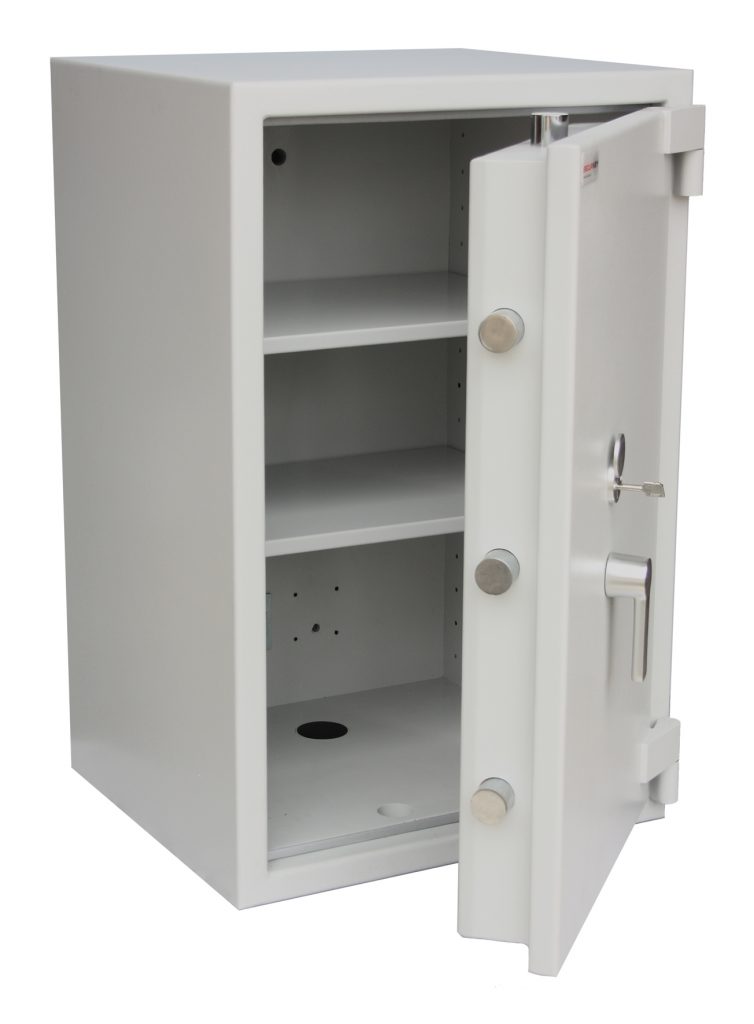
High security safes offer a high level of security for both commercial businesses and within the home, protecting your valuables from theft or any other harm such as fire, flooding or general damage.
For high security safes we consider Eurograde 4,5,6 models to meet this need, as they offer enhanced protection and are rated to a high cash value.
If you’re looking to buy a high security safe but unsure of what type you need or what features you need then this guide aims to help. By uncovering the key factors like security ratings, sizes, lock types and installation options you’ll have everything you need to make a decision, and if you don’t then call our experienced team today.
Understanding Security Ratings of High Security Safes
What are security ratings?
The first thing you need to know about high security safes is the security ratings. But what are security ratings? Put simply the security ratings of safes help to indicate the level of protection the offer against burglary and theft. The rating system is carried out by certified governing bodies who subject the safes to a variety of attack methods to assess their resilience to these attacks.
By giving the safes security ratings it makes it clear and easily digestible the level of protection they can provide. The higher the security rating, the more resistant the safe is to attempts of forced entry.
Many insurance companies also specify a specific safe security rating required for their policies to cover valuables. Ensuring your safe meets the policy is vital for protection. In some cases if you a high security safe and the right compliance this can help lower the insurance premium.
Eurograde Ratings
Throughout Europe and the UK the safe industry widely recognises Eurograde ratings. Eurograde starts at S1 up to Eurograde 6 with each number representing a higher level of security.
Eurograde 4: Offers a high level of security, suitable for storing large amounts of cash, valuable items, and sensitive documents. Typically, these safes are tested to withstand advanced burglary attempts and provide substantial fire protection.
Eurograde 5: Represents an even higher security level, ideal for both commercial and residential use where exceptionally high-value items need protection. These safes are built to endure severe attacks and come with advanced locking mechanisms.
Eurograde 6: The highest standard in the Eurograde rating system, Eurograde 6 safes offer maximum security. They are designed for the most critical applications, such as securing significant amounts of cash, high-value jewellery, and sensitive information, making them suitable for high-risk environments.
Eurograde
Cash Rating
Valuables Rating
S1
£2,000
£20,000
S2
£4,000
£40,000
0
£6,000
£60,000
1
£10,000
£100,000
2
£17,500
£175,000
3
£35,000
£350,000
4
£60,000
£600,000
5
£100,000
£1,000,000
6
£150,000
£1,500,000
Importance of Size and Capacity of High Security Safes
When considering buying a high security safe you need to consider what you’re going to be storing within the safe and then find a balance between the safe size and the items you are storing. You’ll need to make sure your items fit inside comfortably but also, you’ll want to think about your future needs.
Our high security Eurograde 4 Safes are available in 7 sizes ranging from 82 to 770 litres – view our Eurograde 4 safes for specific dimensions.
Our Eurograde 5 safes are available in 7 sizes ranging from 96 to 770 litres – view our Eurograde 5 safes for specific dimensions.
Here’s some tips for assessing the right size of high security safes:
Take inventory of your valuables: Start by making a list of all items you intend to store in the safe. This may include cash, important documents, jewellery, electronics, or other valuable items. Knowing what you need to store will help you gauge the minimum size required.
Measure Larger Items: If you have larger items like binders, laptops or collectables, measure their dimensions to ensure they fit within the safe’s interior space. Pay attention to the safe’s internal dimensions rather than just the external ones.
Consider Future Needs: Think about your potential future security needs. It’s a good idea to choose a safe with more capacity than you currently need. This will accommodate any additional items or if it’s for business use it will accommodate business growth – especially if the business deals with cash, saving you money on another safe purchase later.
Space Constraints: Evaluate the available space in your home or business where the safe will be installed. Ensure that the chosen safe fits comfortably in the intended location, considering both the physical space and the ease of access for daily use. Remember for maximum security many high security safes will need to be secured to the floor.
Installation of High Security Safes
To maximise the security of your safe it’s important to ensure the safe is correctly installed. There are several pros and cons to each method as well as a number of factors to consider when deciding what location to install your safe.
Installation options
Wall mounted safes: just like in films, this is a safe mounted into a wall and often hidden behind a picture or even furniture. The benefit of this type of installation is that it’s hidden out of plain sight so it’s a discreet option. It also means removing the safe is difficult. the cons of this type of installation method are that you’re slightly limited by the size of the safe due to wall space, also it’s difficult to move the safe if needed.
Floor Standing Safes: These safes are bolted to the floor for extra security. The advantages of this type of installation are if you need to store large items you can fit a larger safe and it’s easier to move if needed. The downsides are that the safes can take up a lot of space and it’s hard to hide the safe.
Hidden Safes: Another popular installation method is a hidden safe – concealed within furniture, under floorboards or other methods of hiding the safe from plain view. The advantage of this type is the extra layer of security from the discreet location of the safe however again space can be limited and accessibility to the safe could be a problem if regular access is required.
Key Factors When Installing a High Security Safe
Here are some key factors to consider when installing a safe:
Accessibility and Use:
Proximity: Install the safe in a location that is easily accessible for authorised users, especially if you need frequent access.
Visibility: Choose a spot that isn’t immediately visible to visitors (or intruders). Hidden or discreet locations can significantly enhance security.
Security Considerations:
Structural Support: Ensure the installation site provides adequate structural support, especially for heavy floor-standing safes. This might be a reinforced floor or a sturdy wall.
Avoid Obvious Places: Avoid placing the safe in common or obvious locations such as master bedrooms or home offices, as these are typically the first places burglars may check.
Basements: Installing a safe in a basement can offer additional protection against fire and theft, but ensure the area is dry and not prone to flooding.
Environmental Factors:
Humidity and Temperature: Choose a location that is not subject to extreme temperature fluctuations or high humidity, as these can damage both the safe and its contents if exposed for long periods.
Fire Safety: Consider areas that provide natural fire protection, such as lower levels of the building. However, ensure that the safe itself is fire-rated.
For maximum security, see our safe installation services. We can ensure that the safe is properly anchored and concealed while providing expert advice on the best placement for your specific needs. This is especially important to ensure your safe meets its requirements and the requirements of any insurance policies.
Choosing the Right Lock Type of High Security Safes
High security safes usually come with multiple locking options but generally will have 2 locking mechanisms. For example, our Eurograde 4 and Eurograde 5 safes are available with key and combination locks, Key locks and electronic locks or dual electronic locks.
Key Locks
Traditional mechanical locks are operated by a physical key. These locking mechanisms are simple to use with no need for a power source or batteries and due to complex key designs can be highly secure. The disadvantage of these types of locks is that keys can be lost or stolen, it can be less convenient if frequent access is needed. There’s also the duplication risk if keys fall into the wrong hands.
Combination Locks
Mechanical locks require a specific sequence of numbers to open. The advantages of this type of lock are that there’s no need for batteries or external power, they’re highly reliable with no electronic failures and they’re difficult to bypass without knowledge of the combination. The downsides are that they can be time-consuming to open and combinations can be forgotten, access to the safe is also only limited to the knowledge of the person who knows the sequence but this can also be advantageous.
Electronic Locks
Digital locks are operated via a keypad, biometric scanner, or RFID card. The benefits of these locks are that they provide quick and easy access, are easily reprogrammed for new users, and provide advanced security options like biometrics provide higher security. The electronics inside can often include audit trails to monitor access by a person. The disadvantage is the dependence on batteries or power supply along with the potential for electronic malfunctions. If not properly secured these locking options may be more susceptible to hacking.
Think carefully about the type of lock on high security safes that will best suit your needs. Multiple locks provide the best protection – if one is compromised then the other lock will remain secure.
Special Focus: Eurograde Safes
What sets Eurograde Safes apart?
If you need a high security safe, then Eurograde safes are renowned for their exceptional security capabilities and security features. As mentioned, the safes are subject to rigorous testing ensuring they meet strict standards.
Rigorous Testing and Certification: Eurograde safes are tested by independent certification bodies such as the European Certification Body (ECB-S) and the Association of Insurance Surveyors (AiS). These organisations conduct exhaustive tests to evaluate the safes’ resistance to various forms of attack, including drilling, cutting, and explosive force.
Enhanced Security Features: Eurograde safes are constructed from high-grade materials such as reinforced steel and advanced composite materials. These safes feature multi-wall construction, providing additional layers of defence against penetration attempts. They incorporate multiple locking systems adding additional layers of security.
Fire Protection: Many Eurograde safes are also tested for fire resistance. They are designed to protect contents from high temperatures and flames for specified periods, often up to 60 minutes or more. The safes also often feature Intumescent seals meaning when exposed to heat the seals of the safe expand to help protect the safe’s interior from smoke damage.
Insurance Recognition: Eurograde safes are widely recognised and recommended by insurance companies. Installing a Eurograde safe can help meet insurance requirements for both residential and commercial policies.
Browse our full range of high security safes to buy online – many are Eurograde rated.
When purchasing a high-security safe, you need to consider several key factors to ensure you select the best safe for your needs. Understanding security ratings, especially the Eurograde system, helps in evaluating the safe’s resistance to burglary and fire.
We hope this guide has helped to give some direction on what to look for when buying a high security safe. The right safe not only provides peace of mind but also meets insurance requirements and safeguards your most important possessions.
Make a smart investment in security with Trident Safes today.
Do I need to hire a Hiab Crane?
When moving locations involves shifting large heavy items, you will need more than just the services of a removalist company. For weighty objects or those in awkward and hard-to-reach areas, you need a Hiab truck with a crane for safe and efficient removal.
Hiabs for hire come in a range of sizes and carrying capacities and can be used anywhere from tight spaces in city centres to warehouses, ports, and construction sites. The following is our guide on Hiab trucks, the benefits of Hiab haulage, and what to look for in Hiabs for hire.
What is a hiab crane?
In general, a Hiab is designed for lifting and moving large, heavy equipment, including furniture, machinery, or even large safes. These vehicles are often large lorry-style vehicles with a hydraulic crane at the back that makes loading and unloading more efficient. The crane is also equipped with a flexible arm that enables it to access even the most difficult-to-reach areas. Therefore, by hiring a Hiab, you no longer need to hire a separate crane and transportation services when moving difficult-to-shift objects.
The benefits of hiab crane hire
Unless you are using a Hiab crane regularly, it makes more sense to hire one on an as-needed basis rather than purchasing one outright. This is a much more flexible and cost-effective solution that allows you to access a Hiab hire whenever you need it.
In addition to being expensive and time-consuming, it is also inconvenient to hire separate cranes and transportation companies. It is more efficient to hire a self-contained Hiab to lower expenses and improve overall operational efficiency.
A Hiab van can handle and deliver huge loads easily and can load and unload these objects without requiring an additional separate crane between locations.
There are many sectors in which Hiab lorries are employed. These include the shipping and construction industries, as well as commercial sectors such as the banking industry, and even in some cases domestic removal services.
In comparison to independent transport and crane operations, Hiab trucks with attached cranes are better suited to heavy logistics.
Its 180-degree rotation and long length make Hiab cranes suitable for lifting and removal in narrow and confined environments.
In comparison to regular cranes, Hiab cranes are much smaller, which makes them easier to transport between destinations.
Tips on hiring a hiab crane
Choose a Hiab vehicle that suits the size and weight of the load you are planning to move. Standard trucks are better for lighter loads, while you may need to look at more heavy-duty options for larger, bulkier loads.
Consider how far you need to transport each load. If you plan on transporting goods across a long distance, you will need to know that the vehicle you choose can handle your transportation needs.
Are there any special considerations when it comes to moving objects, such as uneven terrain, narrow streets, or areas with low clearance? Check that your choice of truck has a crane that can easily manoeuvre in such areas.
Make sure you have all the necessary documents and paperwork in order when hiring a Hiab vehicle. This includes proof of identity, insurance documents, and any other related documents as discussed with the hire company.
Make sure to hire a Hiab vehicle with a crane from a reputable company such as Trident Safes. Check to see if they conform to the latest industry standards and regulations and look online for customer reviews and testimonials.
Consider the overall cost of hiring a Hiab vehicle. This includes making sure that you select the right type of vehicle for the job rather than just going with the largest option. Also consider other costs such as coverage, fuel, and any additional labour.
hiab crane hire from trident safes
Trident Safes sister company, Trident Specialist Transport has a fleet of Hiab vans that can handle any major removal project. We have years of professional experience dealing with a variety of customers and are well-informed about the complexities of moving heavy articles. Additionally, with all transportation and removal services being handled in-house the work will be completed to the highest standard.
In terms of size, our Hiab vans are available in three sizes: 18 tonnes, 26 tonnes, and 32 tonnes. Depending on the model, our vehicles can lift between 12 and 44 tonnes per metre. Vehicles with 18 tonnes and cranes lifting 12 tonnes per metre are ideal for city areas with limited space. The rest of our lorries are suitable for building sites, warehouses, and ports, among others.
All our vehicles are approved for work in central London according to TFL criteria. As part of the removal and relocation process, we can conduct thorough risk assessments as well as offer lift plans upon request. Get in touch with Trident Specialist Transport as soon as possible to learn more about our Hiab hiring services.
Safety Training and Certification
When it comes to transporting heavy items in those in hard-to-reach areas, access to a lorry loader crane is vital. When you hire HIAB trucks from Trident, you not only get a strong and sturdy vehicle that can transport any object easily but also a qualified driver and operator that is fully certified and has complete knowledge about safety procedures. All our lorry loader crane operators undergo thorough training to ensure they can operate HIAB trucks safely and with the utmost professionalism every time. Here are some of the training and certifications that you will get with a HIAB truck hire with a driver.
HIAB Licence
Eligibility for a HIAB licence
To fully qualify for a licence to drive and operate a HIAB crane, all drivers must meet certain minimum criteria. First, all drivers must be at least 18 years of age and have a full UK driving licence. Each driver must be physically up to the task of operating a crane, which can be proven through a medical assessment. Lastly, our drivers must already have a Certificate of Professional Competence (CPC) Licence alongside their standard driving licence. If they have already trained to operate an HGV, they should already hold a CPC licence, otherwise, they will need to undergo a theory and practical exam to receive one.
Training for a HIAB licence
During a standard HIAB training course, the driver will learn all the theoretical and practical aspects of operating a HIAB crane. This includes working on the different components of a HIAB vehicle, equipment management, using the right lifting gears, and assessing the weights and balances of loads before transportation. The training courses also focus on health and safety procedures such as protective clothing and risk assessments, legal requirements such as proper documentation and traffic regulations, and operation techniques such as safe manoeuvring and positioning of cranes. Afterwards, the driver will complete an exam based on theory and practical assessments to prove they are competent enough to operate a HIAB truck. If they pass their exam, they will be given certification to operate a HIAB crane.
Other safety measures employed by HIAB drivers.
All HIAB drivers must comply with the Lifting Operations and Lifting Equipment Regulations 1998 (LOLER) as set out by the Health and Safety Executive (HSE) to ensure safe and proper lifting.
A risk assessment is carried out before each operation to prevent accidents. The assessment must consider the surrounding environment, including weather, terrain, and anything nearby that could pose a risk.
Signage and hazard protection methods must be employed before the operation to ensure the safety of all parties involved, including any members of the public.
Protective clothing must be worn by all employees, and safety equipment such as hard hats must be issued to prevent injury.
The equipment must be inspected regularly throughout its life, and any faults will need to be identified and repaired as soon as possible.
Moving a safe is not always a straight forward job, there are many factors to consider before attempting to move your own safe, most importantly is the risk of serious injury to yourself or others. Safes can be extremely heavy and should be moved using the correct technique and equipment, operatives should have the correct safety wear, ie steel toe cap boots to protect your feet, and gloves to protect your hands.
During Safe moving, avoid:
Damage to your safe
It is possible that damage can be caused to your safe whilst moving it, the most obvious damage would be to the handle or lock mounted to the front of the safe, this can be easily knocked on door frames or if the safe is dropped on its face it will almost certainly need replacing. The inner workings of safes can also be rather delicate, on some models of safes there can be glass plates known as AED’s. They are in place to protect your safe against attack, these glass plates are highly effective and once shattered they lock the safe up with small spring loaded locking devises, this means that even with the key or code for your safe you will still not be able to access it without the help of a professional safe engineer, this can also be very costly! If whilst moving a safe it is accidentally dropped it can in some cases shatter the glass plates causing the problems described above. We have been called out on many occasions to assist in opening safes after they have been moved and damaged.
Damage to property
When removing or installing safes it can be very easy to damage property. Damage to walls and door frames is easily caused due to the sharp, solid corners of safes. Floor protection should be used where necessary to prevent carpets from being marked and in some cases torn, tiled floors need extra care when passing over with safes as the weight of the safe can sometimes crack tiles. If the safe will be placed in a lift at any point of its journey it is advisable to check the weight loading capacity of the lift and insure that the safe does not exceed this.
Use a professional service
If you do decide that the job of moving a safe without professional help seems to much of a risk please do not hesitate to contact us. You can rest assured that every risk of safe moving is always considered by our team and we are very experienced in the job that we do. All of our vehicles always carry every piece of equipment that we may need to move your safe. We also have all insurances in place in case anything should ever be damaged so you as a customer will have a stress free service from us. We can also provide free site surveys to asses the job and also answer any questions you may have.
Safe Cash Ratings: What Do They Mean?
If you have thought about getting a safe, you will have noticed that there are many factors to consider; one of which is the safe cash rating. But what exactly is it and why is it important? This guide will help you understand the importance of your safe’s cash rating.
What is a Cash Rating?
This relates to the amount of cash that your safe can securely hold in the eyes of an insurer. While your safe can physically hold more than this amount, you will not be insured past this figure. You should use the cash rating to figure out how much you should store in your safe, as it is the maximum amount of cash your insurance broker will cover in the event of a burglary.
What is a Valuable Rating?
There are other items that you will want to store in your safe besides cash. The cash rating also determines the maximum amount of valuables you can safely hold. You can store valuables up to 10 times the value of the cash rating. A cash rating of £1,000 covers you for £1,000 cash and £10,000 of valuables. So you should determine the correct cash rating to suit your needs.
What Does the Rating Mean for Insurance Purposes?
Knowing how much cash and valuables you will hold in your safe should be the first thing you consider. Knowing this, you can choose the correct cash rating to ensure all of your items are covered. You will also need to install the safe properly and take necessary precautions to safeguard it. That is why it makes sense to consult a professional for advice as they can help you adhere to the insurance requirements.
What is Eurograde?
Eurograde is a European-wide numbering system that categorises the security of your safe. All Eurograde safes undergo rigorous testing before they receive their rating. The rating system runs from 0 to 6, and the higher the number, the higher the cash rating will be. A Eurograde 0 rating will have a cash rating of £6,000. A Eurograde 6 rating will have a cash rating of £150,000. For a more detailed breakdown, take a look at our Safe Buying Guide.
What Cash Rating Do I Need my Safe to Meet?
First, decide on the maximum amount of cash or valuables you will store in your safe to get a cash rating estimate. We recommend you then opt for a safe that is 25% higher than this amount. Once you know the cash rating that suits your needs, you can start to look for the best safe for you. Remember you also need to install the safe correctly, so make sure to consult a professional.
At Trident Safes, we offer a range of safes suitable for all requirements; from S1 safes for low-value items, through to explosive-resistant Eurograde 6 safes. You can browse the complete range of cash-rated safes for sale on our website.
Safe Locks: Is a Key or Digital Lock Best?
No matter what we do in life, keeping ourselves and our belongings safe is very important. For this reason, many people store their valuables in a safe. And when it comes to safe locks, there are many options to choose from. Some people swear by traditional key locking safes as being the best. Others prefer modern digital locks and believe they are the most secure. So, which is the best option for you and your valuables? Before you make your choice, compare the pros and cons of each.
Traditional Key Locking Safes
Many old Western Films revolve around a gang trying to steal valuables from a safe. In fact, traditional safes have been around for hundreds of years. And they are so reliable that many of the earliest safes are still in use today. They are cheaper than digital safe locks and need very little maintenance. While many people assume that key locks are easier to break into, this is a common misconception. Key lock safes require a huge effort to open without the key. Just ask any locksmith who needs to open a safe when someone loses their key. But this also leads to the downside that you need to keep the key safe. Losing the key could compromise your valuables if someone finds it and knows where your safe is. Many people leave a spare key with someone they trust so they can retrieve their valuables if they lose the key.
Modern Digital Safes
A digital safe offers many more safety options than key lock safes, and they are quite versatile. You can change the code anytime you like without anyone knowing. That can be useful if your business changes staff or an employee leaves. It is also a good idea to change your combination often to maintain the best security. Digital safes are simple to use and quick to open as you simply need to enter the access code. And there is no need to worry about losing a key! Many digital safes will lock themselves down if someone enters the wrong code several times. A minor inconvenience to a digital safe is that you will need to change the battery regularly. But the biggest downside is that they will cost you more than a traditional key safe.
So Which Type of Safe is Best?
Choosing the best safe is simply a matter of preference. Both options are great for keeping your valuables safe, but it more or less comes down to the cost versus the convenience. Some people will prefer a key safe since it’s cheaper, and others may prefer a digital safe for the extra features. Once you decide on which type of safe you want, it’s just a matter of finding the one that suits your needs.
Whether you are looking for a traditional key locking safe or a modern digital option, view the full range of safes available from Trident Safes.
Just How Safe are Home Safes for Valuables?
A safe for valuables will provide the safest and most secure location in your home for your possessions. When it comes to protecting expensive items, a high quality home safe is the perfect choice.
The team at Trident Safes is dedicated to providing the most efficient and secure solutions for our customers. That’s why we offer a professional and reliable home safe installation service for every type of home. So, let’s take a look at how secure home safes really are, and how you can make them even safer.
Timer-based lockouts
Timer-based lockouts have added yet another level of protection to the security of home safes. The lock can be easily programmed to open only at specific times on certain days.
Alternatively, it can be programmed to open after a preset length of time following the entry of a pin code. That makes the safe inaccessible to anyone without knowledge of the timings.
Security rating
Safes are rated according to the level of protection (see our safe buying guide for details) they provide, usually denoted as a certain amount of cash. However, it’s advisable to check your insurance policy to see if you need to comply with other measures as well.
These may include how the safe was installed who by, where it’s located, and what standards it conforms to. Cash-rated safes are very hard to break into, and are perfect for protecting valuable items and jewellery.
Fitted safes
A fitted safe will offer better protection for your precious items than a freestanding unit. Fixed to concrete or fitted within a floor or wall, it gives a would-be thief less options.
Always bear in mind that burglars must first locate a safe before they attempt to open or remove it. For that reason, it’s advisable to locate your safe for valuables somewhere unexpected and out of sight. It certainly shouldn’t be visible through a window.
Avoid discussing your safe with people who are not family or trusted friends. It’s easy for people to disclose sensitive information inadvertently, without knowing they’re doing it.
To make sure your safe is even more secure, Trident Safes can advise on the ideal location within your home.
Household security
If you’re investing in a home safe, it’s important to ensure your home security is also the best it can be. In simple terms, if thieves can’t get into your home, they’ll never get into your safe.
Make sure your security alarm system covers your entire home, so that thieves can’t bypass it and access your safe. Additional door and window locks are another inexpensive way of making your home – and your safe – more secure.
The Differences to Consider When Choosing Home and Office Safes
A safe is an excellent investment if you want to improve the safety and security of your premises. But as not all safes are made the same, you will need to consider the differences between home and office safes. Factors that can help you decide on the best safe include what you plan to store within, the value of the content, and how active your premises are. Here is our guide on what to look at when buying a safe for your home or office.
What to Consider When Choosing a Safe
There are certain factors to consider when choosing a safe for your home or office:
The value of the contents within the safe should determine the level of security you need. While you could buy a basic safe for all your valuables, you may be denied the full amount of an insurance claim if the value of your contents exceeds the Eurograde rating of your safe. Businesses, in particular, need safes with a Eurograde rating of 5 or 6, while home safes may only need a low Eurograde rating. Make sure you calculate the total value of your contents before purchasing your safe. You can find out more about Eurograde ratings in our guide.
How much regular foot traffic your home or office gets is another factor to consider when buying a safe. Businesses tend to see more frequent traffic than homes do, which usually means that more people will have access to valuable items. Therefore, safes in businesses need a higher security rating to avoid the risk of tampering. As a home generally has fewer people and less activity, security need not be that high.
The size and structural needs of a safe is another factor to consider between businesses and homes. A business safe might require more space than a home safe, and in some cases a full security cabinet might be needed for keeping documents, cash and other valuables secure. Home safes don’t often need such heavy security, especially for a single person or small family.
What to Keep in Your Safe
When it comes to home and office safes, both will differ according to what items they need to protect. Typical contents to keep in a home safe include:
Insurance information in case of property damage.
Medical documents, including contact information for doctors, and details on medicines needed.
Birth certificates.
Passports.
Copies of wills.
Financial information, such as bank accounts and investments.
Property and vehicle documents.
Any additional legal documents.
Valuable keepsakes, including jewellery and photos.
When it comes to office safes, the following business documents and other items are more typically stored: